
What Exactly Is Fascia?
Fascia is a continuous web of collagen-rich connective tissue that surrounds muscles, organs, nerves and vessels, giving the body shape and structural support. Deep fascia, also known as musculoskeletal fascia, plays an important role in transmitting and distributing forces throughout the body. It acts as a force-transmitting network, while allowing tissues to glide and adapt to movement. Think of it as a seamless body suit connecting our muscles, with no clear beginning or end.

Poor posture, lack of movement, repetitive load, muscle imbalance, injury, surgery and even stress can contribute to fascial densification—changes in the hyaluronan within deep fascia that reduce tissue glide. As layers move less freely, range of motion may become restricted, compensations can develop, biomechanics can change, and discomfort can persist.
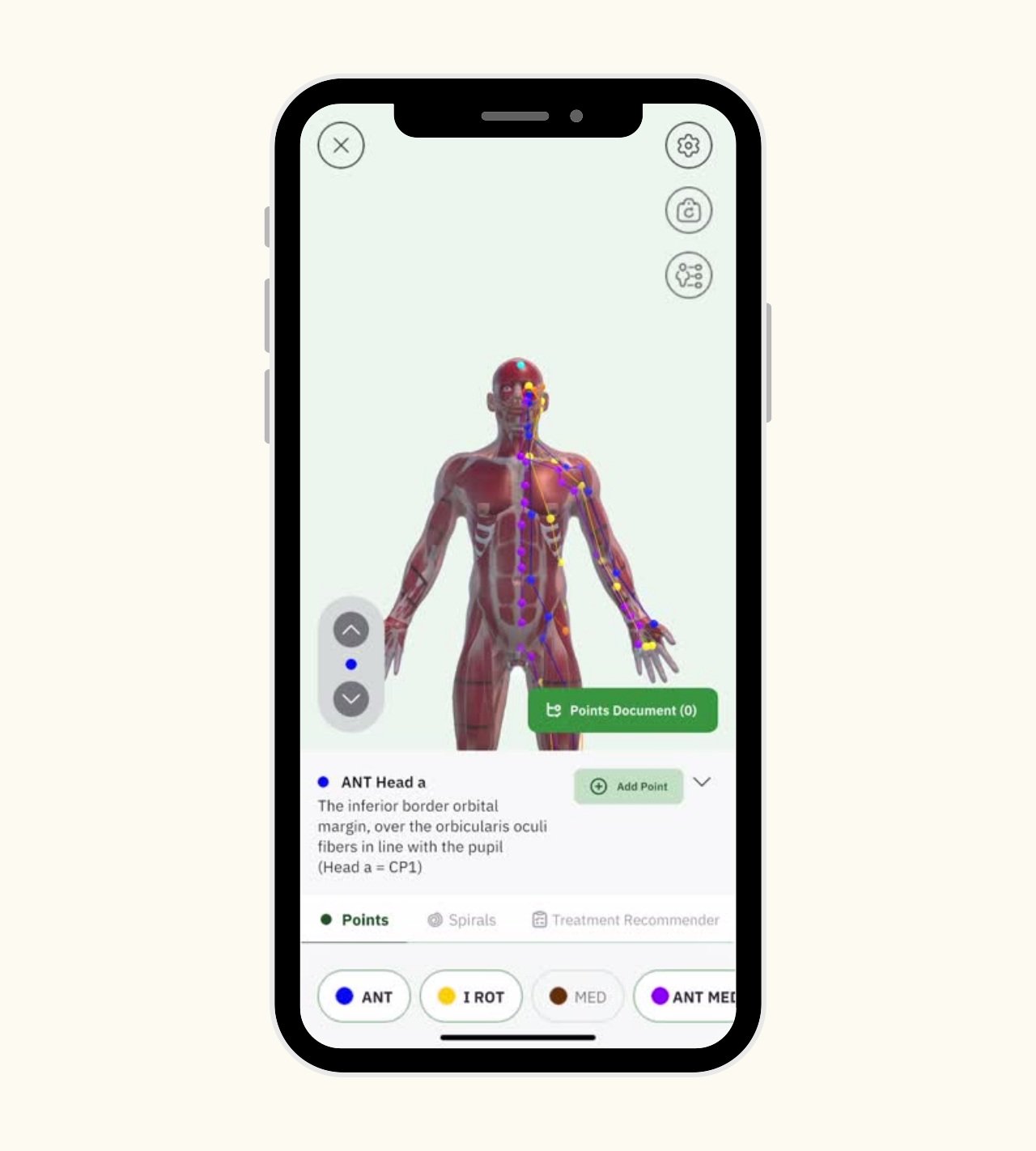
Most tools focus on broad muscle vibration or compression. The TheraFascia app helps identify likely densified fascial regions, while the device delivers sustained, directional shear with gentle heat to targeted biomechanical points—supporting tissue glide, mobility, and more efficient movement.

Healthy fascia helps muscles move efficiently, distributes force across the body, and contains a rich network of sensory and proprioceptive nerve endings. When fascia glides well, movement feels easier, load is shared more effectively, and the body can adapt better to stress.
Browse the growing evidence behind fascia care. We highlighted peer-reviewed research on Fascial Manipulation® for complex MSK care.
| Study (Author & Year) | Key Outcomes Reported | Source |
|---|---|---|
| Trybulski et al., 2025 | Meta-analysis of 15 RCTs found Fascial Manipulation® favored active controls for reducing MSK pain, though evidence certainty was very low. | PubMed |
| Sannasi et al., 2025 | Patellar tendinopathy outcomes improved through 1 year; FM required fewer sessions and had higher patient satisfaction. | PubMed |
| Mikołajczyk-Kocięcka et al., 2025 | Improvements in pain, mobility, and neural tension measures in patients with lumbar disc pathology. | PubMed |
| Bellotti et al., 2023 | Adding FM to physiotherapy improved pain, mobility, strength, and function in recurrent shoulder pain. | PubMed |
| Pratelli et al., 2015 | Improved pain and hand function in carpal tunnel syndrome, with benefits maintained at 3 months. | PubMed |
| Brandolini et al., 2019 | Improved symptoms and ankle ROM in athletes with chronic ankle instability, with sustained follow-up benefits. | PubMed |
| Menon et al., 2020 | MRI detected changes in water-bound glycosaminoglycans after FM in patients with chronic elbow pain. | PubMed |
Launching to consumers in early 2028—reserve your device now.
By joining the waitlist today, you get:
"*" indicates required fields
Want to learn more about TheraFascia? Whether you have questions about the platform, device, science, or how TheraFascia could fit into your clinic, send us a message and our team will be in touch.
Allow us to use your information for targeted advertising and data sharing.
See TheraFascia in action at your clinic. Tell us a little about yourself and your preferred time, and our team will contact you to confirm your demo.
"*" indicates required fields